


Plenary 1: From Crisis to Possibility: Reimagining Journalism for Social Justice
(February 11 | 10:15–11:45 pm Slass Auditorium)
This session will examine how journalism can move beyond its crisis-driven lens to highlight solutions, innovations, and resilience-building as pathways to social justice. By shifting the focus from problems alone to the ways communities and institutions respond, this approach to journalism helps rebuild trust in media, nurtures civic hope, and empowers citizens as agents of change rather than passive witnesses of crisis. The session will feature case studies from editors experimenting with justice-oriented reporting, insights from NGOs and advocacy groups using media to advance equity and inclusion, and reflections from scholars of peace and civic journalism who connect hope-centered storytelling to broader democratic movements. Through interactive dialogue, participants will explore how journalism can coexist with watchdog reporting while reclaiming media as a force for hope, ethical storytelling, and inclusive, justice-centered narratives.
Speakers
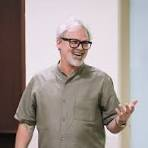
Prof. Jason Gainous
Professor Jason Gainous is a prominent academic in political communication and information technology, who was appointed Dean of the College of Social Sciences at KIMEP University in Fall 2025. He holds a Ph.D. in Political Science from the University of Florida and previously held faculty and dean roles at the University of Louisville and the University of Sharjah. His research focuses on the intersection of information technology and political behavior, leading to co-authored books like Tweeting to Power and the 2024 Oxford University Press release Directed Digital Dissidence in Autocracies. He also serves as the Co-Editor-in-Chief of the Journal of Information Technology & Politics.
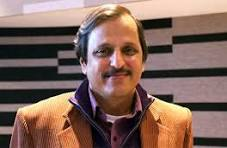
Mazhar Abbas
Mazhar Abbas is a preeminent Pakistani journalist and political analyst currently serving as a senior analyst for Geo News and a columnist for Daily Jang. With over 35 years of experience, he is widely regarded as an authority on Karachi’s political landscape and human rights issues. He holds a Masters in Mass Communication from the University of Karachi and has held prestigious leadership roles, including Secretary-General of the Pakistan Federal Union of Journalists (PFUJ) and Deputy Director of ARY News. His commitment to press freedom earned him the CPJ International Press Freedom Award in 2007 and the Missouri Honor Medal for Distinguished Service in Journalism in 2009. Most recently, in 2025, he published his book Journey Through Chaos, a comprehensive chronicle of Pakistan’s socio-political history and media challenges.
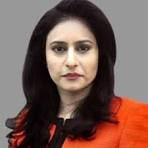
Munizae Jahangir
Munizae Jahangir is a prominent Pakistani broadcast journalist, award-winning documentary filmmaker, and human rights advocate who currently hosts the flagship current affairs show Spotlight on Aaj TV. The daughter of the late human rights icon Asma Jahangir, she holds a BA from McGill University and an MA in Media Studies from The New School, New York. Throughout her career, she has broken new ground as the first Pakistani journalist to serve as a country correspondent for an Indian news channel (NDTV) and has reported extensively on conflict zones in Afghanistan and Balochistan. A leading voice for civil liberties, she is the Co-Chair of the Human Rights Commission of Pakistan (HRCP) and the Editor-in-Chief of Voicepk.net, Pakistan’s first digital platform dedicated to human rights. In recognition of her global impact, the World Economic Forum honored her as a Young Global Leader in 2008. She is also an elected member of South Asians for Human Rights
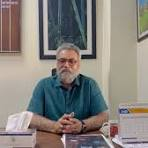
Dr. Altafullah Khan
Dr. Altaf Ullah Khan is a distinguished scholar of international journalism and currently the Dean of the Faculty of Humanities at Forman Christian College (A Chartered University). A DAAD Scholar, he earned his PhD in Mass Communication from the University of Leipzig, Germany, and has over 30 years of teaching and professional experience. Before joining FCCU in 2020, he served as the Chairman of the Department of Journalism and Mass Communication at the University of Peshawar and was a Glidden Visiting Professor at Ohio University. His professional background includes serving as the Urdu Service Chief for Deutsche Welle (Voice of Germany). As a researcher, he focuses on peace journalism and the safety of journalists, notably authoring News Media and Journalism in Pakistan and contributing to global discourse on media narratives and AI’s role in academia
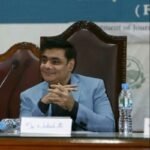
Muhammad Noshad Ali
Muhammad Noshad Ali is a distinguished Pakistani journalist and media executive with over two decades of experience across broadcast, print, and digital journalism. He is known for his rare ability to work and lead simultaneously across all three media platforms.He currently serves as the Chief Executive Officer (CEO) and Founder of Lamha News, and is also the Group Executive Editor at Daily Pakistan. In addition, he anchors the current affairs program “Crossfire with Noshad” on 89 News, where he is recognized for incisive political analysis and hard-hitting discussions.Over the course of his career, Ali has held several senior editorial and leadership positions, including Director News at Capital TV, Head of Current Affairs at Express News, and Content Editor at Dunya TV. In these roles, he played a key part in shaping editorial strategy, live news coverage, and political programming.He graduated in Mass Communication and Journalism from University of the Punjab, which laid the foundation for his expertise in journalism, media studies, and newsroom leadership. Beyond his executive responsibilities, he is frequently invited as a political analyst on various national television channels, where he offers informed commentary on Pakistan’s political landscape, media ethics, and press freedom
Plenary 2: No Justice without Inclusion: Media Activism and the Rights of Marginalised Communities
(February 11 | 12:00–1:30 pm Slass Auditorium)
This plenary session invites us to rethink justice as a human right, beyond legal frameworks and policy statements, as a shared responsibility. It urges us to see inclusion as a democratic imperative and media activism as a moral responsibility, as without inclusive narratives, social justice remains incomplete. And without the participation of those at the margins, hope itself becomes unequal and justice denied. Voices that remain unheard and rights that exist only on paper do not constitute justice; they merely sustain inequalities and the status quo in more subtle forms. Across the world, marginalised communities, including persons with disabilities, ethnic and religious minorities, refugees, women, and other socially excluded groups, continue to face systemic barriers to inclusion, visibility, representation, and participation. Media, as a powerful arena of struggle, can either reproduce silence and stereotypes or become a platform of resistance, advocacy, and transformation. The theme “No Justice Without Inclusion: Media Activism and the Rights of Marginalised Communities” focuses on why systemic reforms in both media discourse and societal attitudes are more essential than legislative interventions, and what steps should be taken in this regard. How media activism can help us reclaim space for the unheard through digital platforms, community media, citizen journalism, and advocacy campaigns.
Speakers
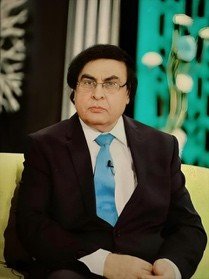
Dr. Khalid Jamil Akhtar
Dr. Khalid Jamil Akhtar, also known as “Big Brother,” is a distinguished neurologist whose life’s work has transformed care and advocacy for people with special needs in Pakistan. A compassionate physician, visionary educator, and tireless humanitarian, he has dedicated decades to rehabilitation, inclusion, and dignity for individuals with challenges. Dr. Akhtar is the author of more than eleven influential books, including his groundbreaking autobiography, Teesra Janam, which continues to inspire readers with resilience and purpose. He founded the Rehabilitation Faculty at Mayo Hospital Lahore, served as its Dean, and pioneered multidisciplinary models of care that offer hope, healing, and opportunity nationwide. His enduring leadership has shaped national awareness, policy dialogue, and community empowerment for persons with disabilities across Pakistan.
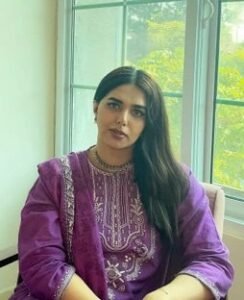
Dr. Sadya Salar
Dr. Sadya Salar is the first openly practicing medical doctor, public health advocate, and trans rights leader currently serving as Advocacy & Partnerships Manager at Khawaja Sira Society and Executive Board Member of Youth LEAD Asia Pacific. An MPH scholar at Imperial College London, she brings extensive experience in advancing gender equity, inclusive health systems, and youth leadership. Dr. Salar has represented Pakistan at prominent national and international platforms, including the International AIDS Society Conference, ILGA Asia Conference, WHO Regional Policy Dialogue, and multiple human rights and youth forums. Her work bridges grassroots community engagement with global advocacy, amplifying the voices of marginalized populations in policy spaces worldwide.
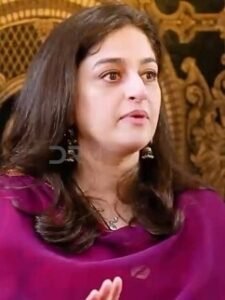
Ms. Nadia Jamil
Nadia Jamil is a celebrated Pakistani actress, child protection activist, and mental health practitioner renowned for her powerhouse performances in dramas like Dhoop Mein Sawan and Damsa. Educated at Hampshire College and the Globe Theatre, she seamlessly blends her artistic career with deep social impact as a certified NLP practitioner and trauma coach. A resilient survivor of breast cancer and an advocate for epilepsy awareness, she has earned widespread respect for her work with the Child Protection & Welfare Bureau and her recent recognition at the HUM Women Leaders Awards.
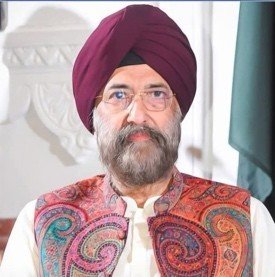
Dr. Tarunjit Singh
Dr. Tarunjit Singh Butalia is the Executive Director of Religions for Peace USA, a distinguished interfaith leader with over two decades of service advancing dialogue, cooperation, and inclusive peacebuilding across faith traditions. He has held leadership roles including a 12-year tenure on the Board of Trustees of the Parliament of the World’s Religions, board membership with the North American Interfaith Network, and founding trustee of the Sikh Council for Interfaith Relations. Dr. Butalia serves on multiple interfaith boards, has received prestigious awards for leadership and unity, and co-edited Religion in Ohio: Profiles of Faith Communities. He authored My Journey Home: Going Back to Lehnda Punjab.
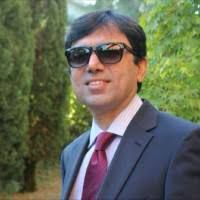
Mr. Farid Ahmad Tarar
Farid Ahmad Tarar is a seasoned public finance advisor based in Lahore, Pakistan, with extensive experience in fiscal policy, economic planning, and financial management. He has worked with leading organizations including Oxford Policy Management, contributing to policy research and advisory services that strengthen public financial systems. Farid is recognized for his expertise in strategic economic analysis, budgeting frameworks, and development finance, supporting governmental and institutional reforms. With a strong background in both national and international finance sectors, he bridges technical insight with practical solutions to enhance public sector performance and sustainable economic outcomes.
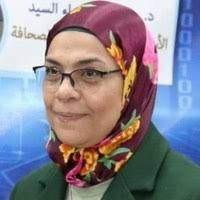
Prof. Dr. Fatma Elzahraa Elsayed
Professor of journalism in Media Department of CLC at the AASTMT, Alexandria and Journalism Department of MCF, Cairo University. IAMCR faculty ambassador in Egypt and Chair of ISM/WG. Expert in media terminology committee at the Arabic language Academy in Cairo. Head of Journalism department at the ACU in Cairo (2015-2016). Vice chair of quality assurance and accreditation unit of MCF, Cairo University (2020-2022). International resource in MCAP doctoral school in Pakistan (2021, 2025). Author of more than 30 publications in media and communication research in national and international journals. Editor of public opinion journal of MCF (2020-2022) Associate editor of ILCC journal of CLC, AASTMT. Reviewer and editorial board member of many academic journals.
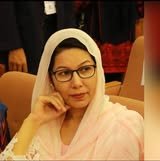
Prof.Dr. Abida Ashraf
Prof.Dr. Abida Ashraf is a distinguished academic in the field of communication studies, currently serving as the Director School of Communication Studies University of the Punjab, Lahore. Previously, she has been the Chairperson of the Department of Public Relations and Advertising at the University of the Punjab, Pakistan. She holds a Ph.D. in Mass Communication from Punjab University and has made significant contributions to research in areas such as communication theory, documentary film, and the interplay between religion and media. As a co-founder of Media and Communication Academic Professionals (MCAP), Prof. Ashraf has been instrumental in fostering a collaborative platform for media academics and professionals across Pakistan. Her dedication to human rights is evident through her active participation in seminars and discussions on global issues, including those affecting Kashmir and Palestine. Throughout her career, she has supervised numerous Ph.D. and M.Phil. students and has an extensive list of publications in both national and international journals. Her work is widely recognized, with over 322 citations reflecting her impact on the field.
Plenary 3: Art, Entertainment & Storytelling as Activism
(February 12 | 11:15–12:45 pm Slass Auditorium)
This plenary session will explore the potential—and the tensions—of films, theater, music, and popular culture as forces of activism. On the one hand, creative industries have shaped social consciousness, challenged stereotypes, and opened spaces for resistance and solidarity; on the other, they face criticism for commodifying struggles, reproducing stereotypes, or diluting radical voices. By drawing on examples from South Asia, the Global South, and diaspora communities, this session aims to examine how art and entertainment can influence public imagination around justice, inclusivity, and hope, while also engaging critically with the risks and contradictions of cultural production in a globalized media economy. Bringing together filmmakers, musicians, dramatists, digital storytellers, and media scholars, the plenary will showcase how storytelling becomes activism, debate its limitations, and identify pathways for integrating art and entertainment into broader struggles for social justice and civic transformation.
Speakers
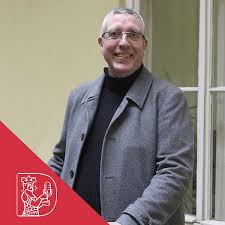
Nico Carpentier
Nico Carpentier is Extraordinary Professor at Charles University (Prague, Czech Republic) and Visiting Professor at Tallinn University (Estonia). He was Vice-President of the European Communication Research and Education Association (2008-2012) and President of the International Association for Media and Communication Research (2020-2024). His latest monograph is Democracy and Media in Europe: A Discursive-Material Approach (2025, with Jeffrey Wimmer, Routledge), and his last arts-based research exhibitions were Constructions of Europeanity at the IAMCR conference in Singapore, and at the Dept. of Communications of Universitas Islam Indonesia (UII) in Yogyakarta, both in July 2025. See http://nicocarpentier.net
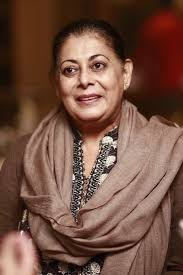
Seemi Raheel
Seemi Raheel is a multifaceted professional whose expertise extends far beyond her acclaimed acting career into the realms of specialized education and social reform.As a Master Trainer and social sector consultant, she leverages her background from National College of Arts and her fellowship at the FXB Center for Health and Human Rights (Harvard) to lead initiatives in reproductive health, gender equity, and leadership. Her teaching experience is diverse, ranging from mentoring emerging talent in the media industry to serving as a GWLN Leadership Fellow at Santa Clara University’s Leavy School of Business. In her activism, she is a staunch advocate for the rights and dignity of artists, while also dedicating significant effort to climate activism, frequently engaging with youth platforms.she endevours to promote environmental sustainability and social responsibility.
Dr. Hasan Zafar
Dr. Muhammad Hasan Zafar is an accomplished academic, filmmaker, and geopolitical analyst currently serving as an Assistant Professor of Film and Media at the Lahore School of Economics. He holds a PhD and MPhil in Film and Television Studies from the University of Glasgow, where his research focused on the intersection of national narratives and documentary cinema. Beyond his teaching roles at the University of the Punjab and Beaconhouse National University, he is the President of the digital platform Federal Post. Dr. Zafar recently represented the Lahore School of Economics at the 2025 World Economic Forum in Davos, contributing to global discussions on South Asian media narratives and policy.
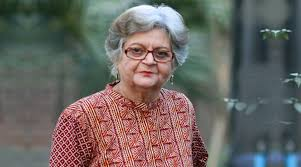
Salima Hashmi
Salima Hashmi is a legendary Pakistani artist, actress, and educator who has been a central figure in the country’s cultural landscape for over five decades. A graduate of National College of Arts (NCA) and the Bath Academy of Art in the UK, she achieved national fame as an actress in the 1970s for her comedic roles in the satirical show Such Gup. She later transitioned into a pioneering role in academia, serving as the Principal of NCA and founding the School of Visual Arts and Design at Beaconhouse National University. As the daughter of the revolutionary poet Faiz Ahmad Faiz, she is also a prominent human rights activist and has been honored with the Pride of Performance for her lifelong contributions to the arts and education.Usman Peerzada
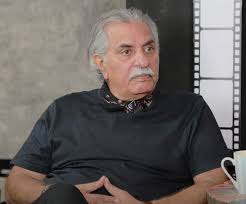
Usman Peerzada
Usman Peerzada is a titan of Pakistani cinema and theatre, holding an MA in English Literature from Government College University, Lahore. He made history in 1976 as the lead in Pakistan’s first English-language feature film, Beyond the Last Mountain, and has since built a prolific career as an actor, writer, and director. As a co-founder of the Rafi Peer Theatre Workshop, he has been instrumental in bringing international puppetry and performing arts to Pakistan, earning global recognition for cultural diplomacy. His international accolades include the Best Iconic Couple Award (alongside Samina Peerzada) at the CPACT Awards in Canada and the Sir Syed Global Excellence Award in the UAE. Furthermore, his lifelong dedication to the arts was formally honored by the French Government for fostering cross-cultural dialogue through the World Performing Arts Festival. He was honorary council genral for Romania and performed hisnduties as vice chairman and chair man Punjab film censor board.